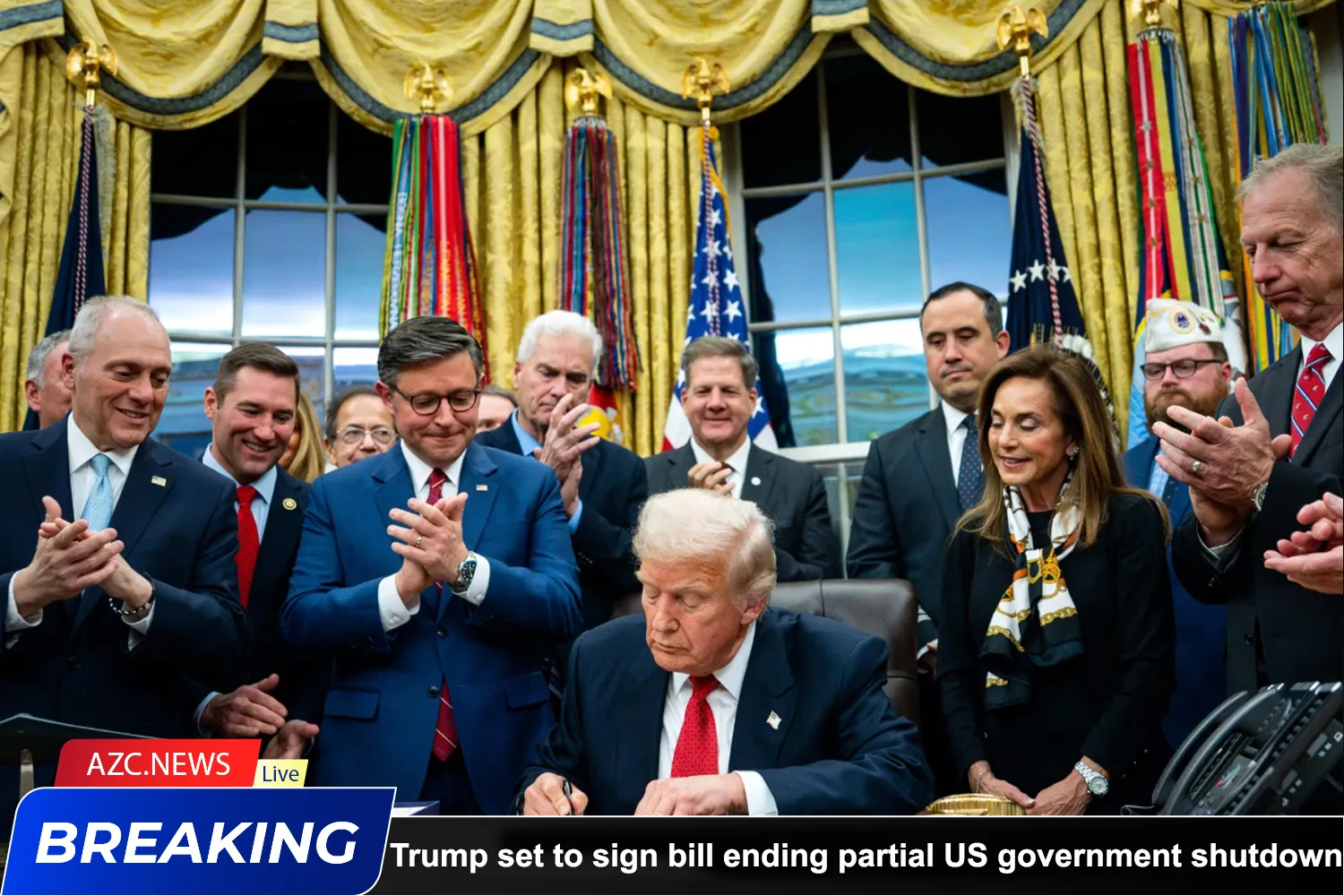
The US House of Representatives has passed a major spending bill aimed at ending the recent partial shutdown of the federal government, clearing the way for President Donald Trump to sign the legislation and restore most government operations.
In a closely divided vote on Tuesday, the House approved the measure 217–214. The roughly $1.2 trillion package had already cleared the Senate and will fund most US government agencies through Sept. 30.
The bill drew limited support from Democrats, many of whom opposed provisions tied to immigration enforcement. The main point of contention centers on funding and authority for Immigration and Customs Enforcement (ICE) and the US Border Patrol.
According to the White House, President Donald Trump is expected to sign the legislation provided there are no changes to the Senate version. Once enacted, the government will reopen after a four-day partial shutdown.
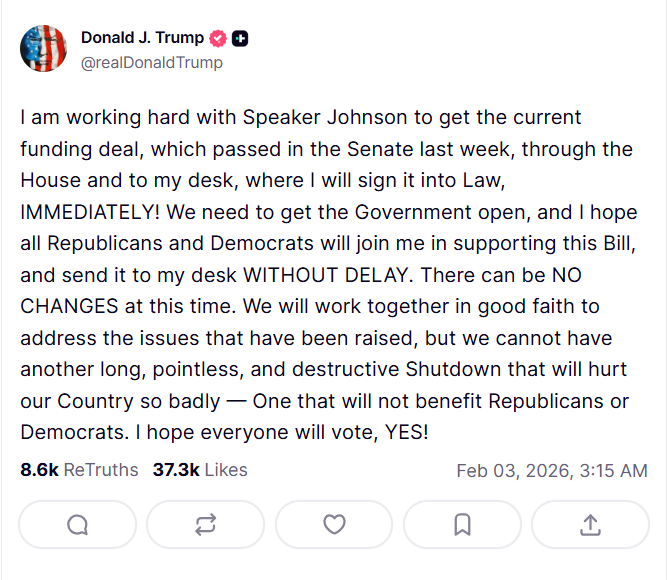
However, the law only extends funding for the Department of Homeland Security for two weeks, after which lawmakers will return to negotiations over ICE operations and border policy, underscoring that immigration remains a flashpoint in Washington.
This shutdown lasted just four days and caused limited disruption, far shorter than the 43-day closure in 2025 that delayed major congressional initiatives, including legislation on digital asset market structure.
Markets reacted positively to the news. Bitcoin climbed about 2% to around $74,620 after the funding bill cleared the House, signaling improving investor sentiment as political risk eased.
Ending the shutdown is also expected to allow the US Bureau of Labor Statistics to release the January jobs report, which had been delayed. The data could influence US macroeconomic policy and financial markets through its impact on unemployment and wage trends.
Senate still divided over crypto market structure bill
While funding tensions have eased for now, major disagreements remain in Congress, particularly over how to regulate digital assets.
Last week, the Senate Agriculture Committee advanced a digital asset market structure bill along party lines, seen as one of the most consequential pieces of legislation for the crypto and banking sectors in years. None of the amendments proposed by Democratic lawmakers were included.
Meanwhile, the Senate Banking Committee, which oversees provisions related to the US Securities and Exchange Commission, postponed its markup after Coinbase CEO Brian Armstrong said he could not support the bill in its current form.
Lawmakers continue behind-the-scenes discussions, but as of Tuesday, a new markup date had not been scheduled, highlighting the political hurdles still facing comprehensive crypto regulation in the United States.