
Silver’s explosive rally is reigniting concerns over inflation, as traditional assets across the board show clear signs of overheating. This development places Bitcoin (BTC) at a critical crossroads, where even a minor macroeconomic shock could trigger sharp volatility.
From a market perspective, many market makers believe that once gold and silver reach their peaks, capital will rotate back into risk assets like Bitcoin, potentially paving the way for another bullish cycle. From a technical standpoint, this view is not without merit.
Silver prices have surged to a record $79 per ounce, pushing the Relative Strength Index (RSI deep into overbought territory and close to the 90 level—a rare and extreme signal highlighted by a strong positive delta. Notably, similar technical structures are emerging across other legacy assets, pointing to a broader, system-wide overextension.

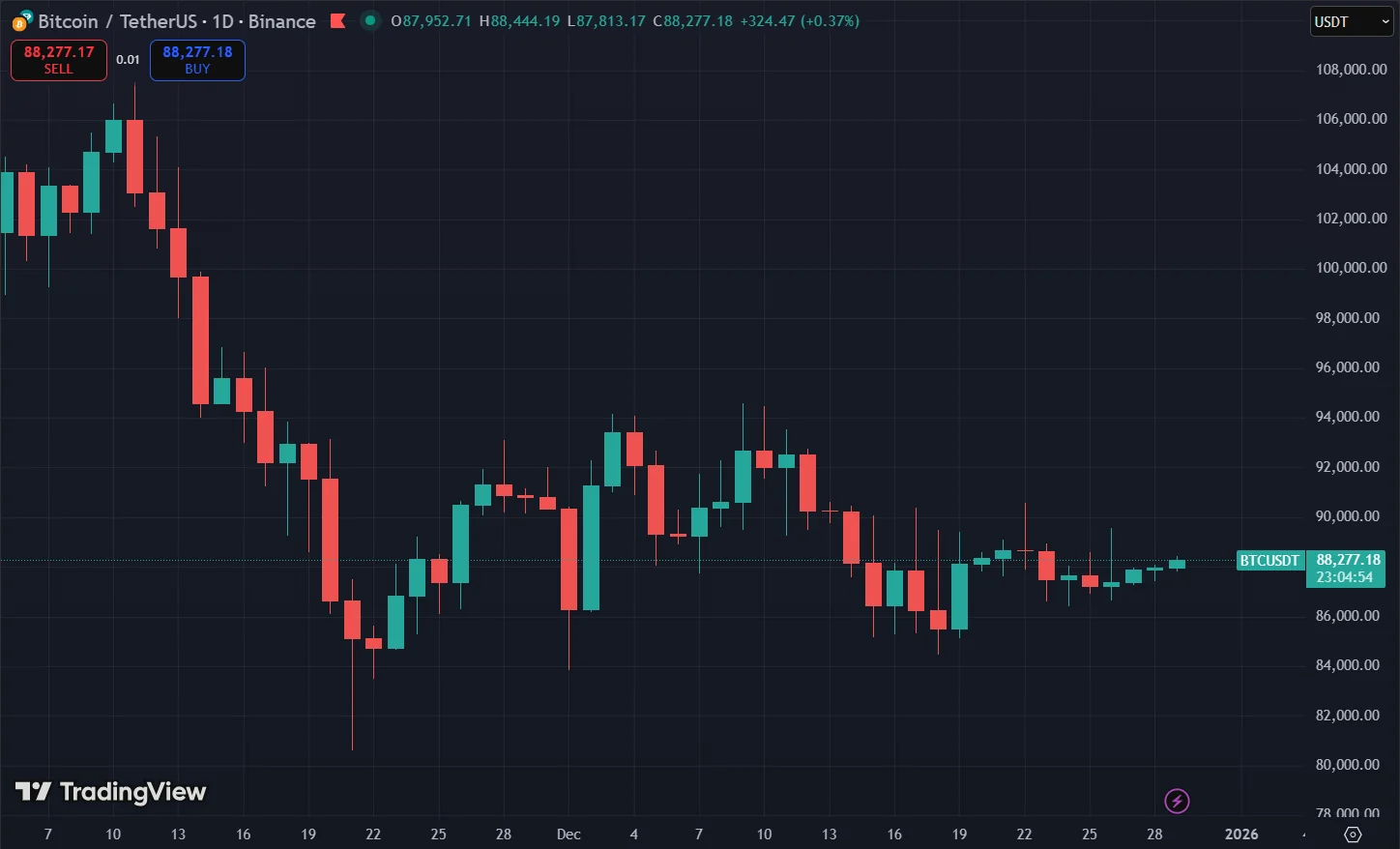
Against this backdrop, Bitcoin’s prolonged sideways consolidation further strengthens the argument that capital rotation into crypto could be imminent.
However, Elon Musk has already offered a compelling counterpoint. In a recent tweet, he emphasized that silver is not merely a speculative asset, but a critical industrial metal used across multiple sectors. This fundamental demand makes silver’s record-breaking rally a genuine risk factor rather than a simple speculative bubble.
Taken together, the breakout across traditional assets appears far from random. Instead, it reflects rising macroeconomic stress. Given Bitcoin’s sensitivity to macro shifts, the key question now is whether BTC is quietly setting up for another flash crash.
Macro Pressure Builds as Bitcoin Approaches the FOMC Meeting
The current market setup is pressing against one of the most sensitive pressure points.
So far this year, the U.S. macroeconomic backdrop has firmly pushed markets into risk-off mode. In such an environment, an interest rate hike would be the last thing Bitcoin investors want to see.
At the same time, silver’s ongoing rally is striking at the heart of the issue—inflation. With silver trading near $79 per ounce, input costs across key industries are set to rise, increasing the risk of broader inflation that ultimately filters down to everyday consumer spending.
The timing could hardly be worse.
While inflation showed signs of easing in Q4, November inflation still came in at 2.7%, well above the Federal Reserve’s 2% target. With the metals rally gaining momentum, the prospect of another rate cut is now increasingly off the table.
For Bitcoin, that factor alone could be enough to spark another market-wide risk-off move.
In this context, the current divergence across markets is not merely speculative. Instead, it signals deeper macroeconomic stress, placing Bitcoin at a decisive moment as the upcoming FOMC meeting approaches—one that could potentially trigger another flash crash.