
Ethereum (ETH) continues to sink as the crypto winter deepens. In the latest session, ETH lost another 3.3%, sliding to around $1,950 — more than 60% below its all-time high. Signals from both the ETF and futures markets suggest that selling pressure is far from over, and Ethereum could fall much further in the near term.
This marks the fourth consecutive week of losses for ETH. The decline accelerated after the U.S. released strong labor market data, reducing expectations that the Federal Reserve will cut interest rates anytime soon. The U.S. economy added about 130,000 jobs in January, while the unemployment rate dropped to 4.3%, keeping risk assets like crypto under pressure.
Futures Market Sends Bearish Signals for ETH
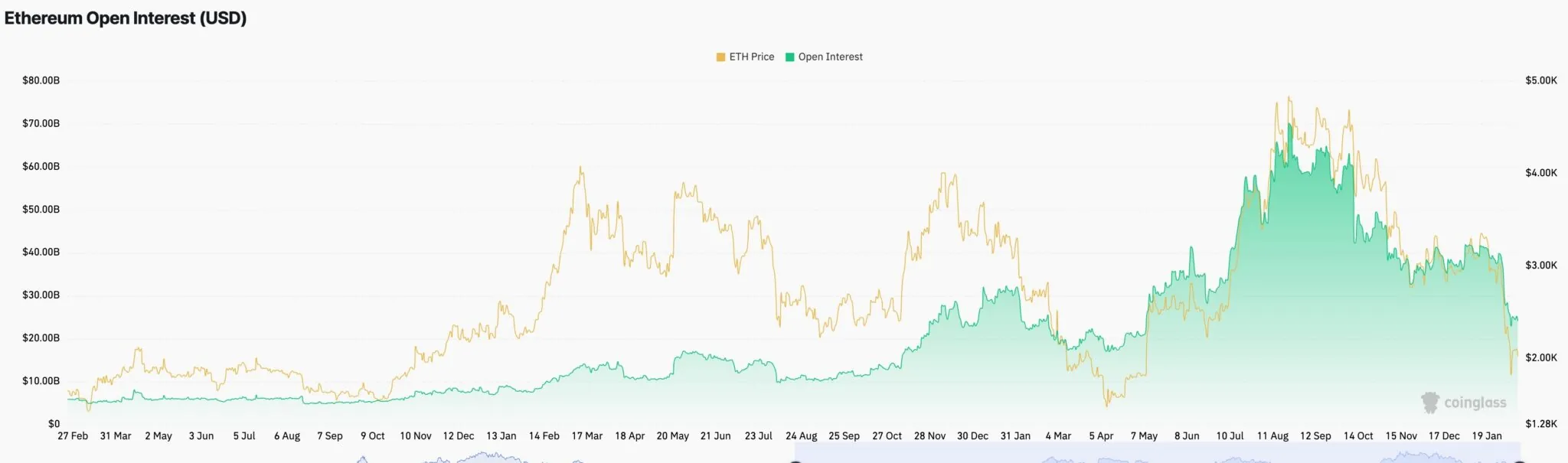
One of the biggest risks for Ethereum right now comes from the derivatives market. Data from CoinGlass shows that ETH futures open interest has fallen to around $23 billion, the lowest level in a month. At its peak in 2025, this figure exceeded $70 billion.
Open interest is widely seen as a proxy for how much leverage investors are using. A sharp decline indicates that speculative capital is exiting the market. Since October, leverage across crypto has been trending lower, reflecting increasingly cautious sentiment among traders.
At the same time, ETH’s weighted funding rate has dropped to -0.0067%, the lowest level since early February. A negative funding rate means traders are willing to pay to maintain short positions, signaling that the market expects prices to move lower.
Ethereum ETFs Continue to See Outflows
The weakness is not limited to futures. Ethereum ETFs are also flashing warning signs. So far this month, ETH ETFs have recorded over $94 million in net outflows, marking the fourth consecutive month of negative flows.
This trend suggests that institutional demand for Ethereum is fading as macroeconomic conditions remain unfavorable and investors reduce exposure to riskier assets.
Technical Outlook: Downside Risks Remain
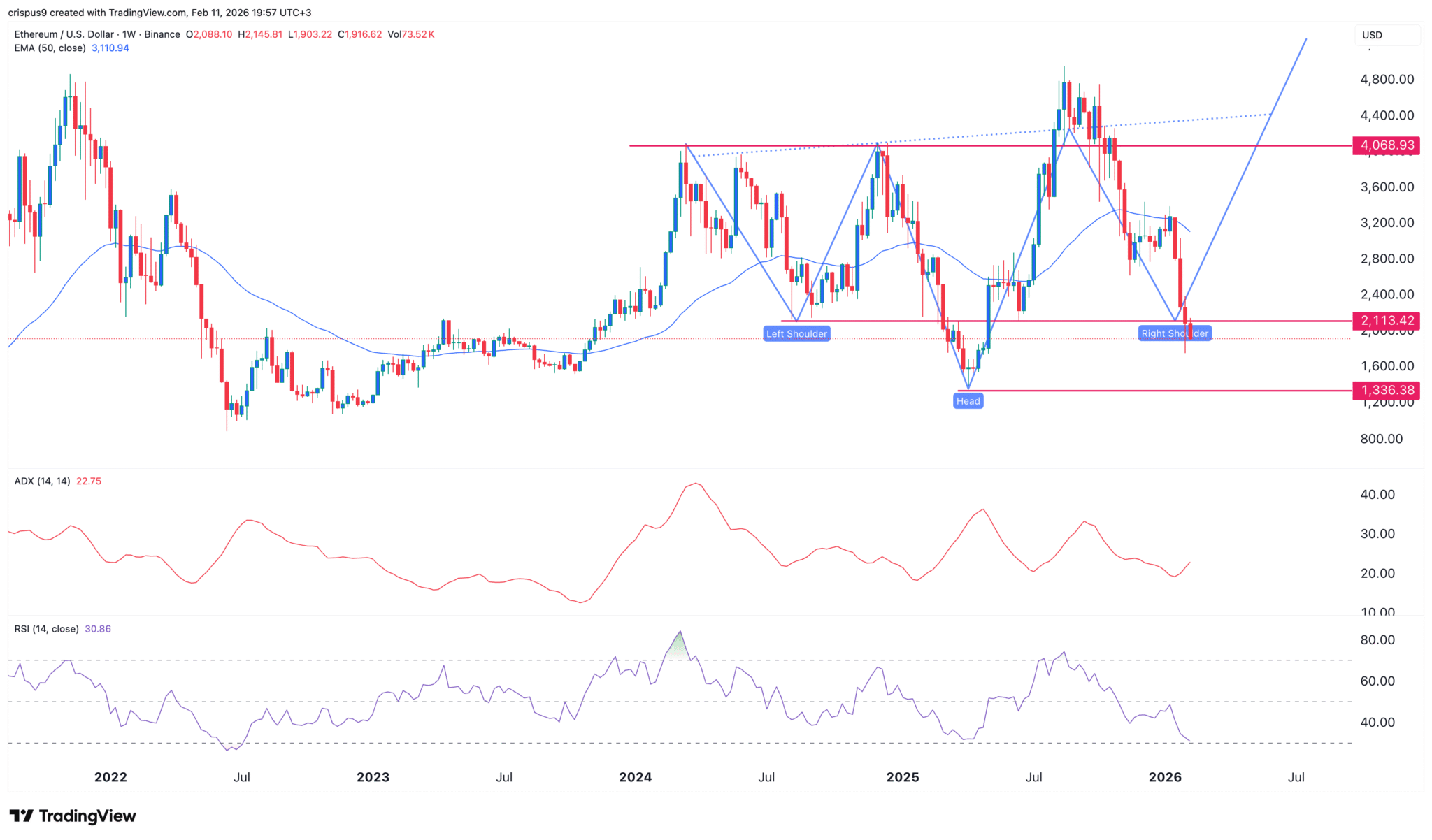
On the weekly chart, Ethereum has been in a sustained sell-off for several months. Notably, price has broken below the key support level at $2,113, invalidating a potential inverted head-and-shoulders reversal pattern.
The Average Directional Index (ADX) has climbed to 22 and is rising, indicating that the current trend is strengthening. Meanwhile, ETH is trading below all major moving averages, and the Relative Strength Index (RSI) continues to decline, highlighting persistent selling pressure.
Given the current structure, the most probable scenario remains bearish. The next major downside target sits near $1,340, which would represent an additional 30% drop from current levels and could mark a potential 2025 low. On the upside, a recovery above $2,200 would invalidate the bearish outlook.