
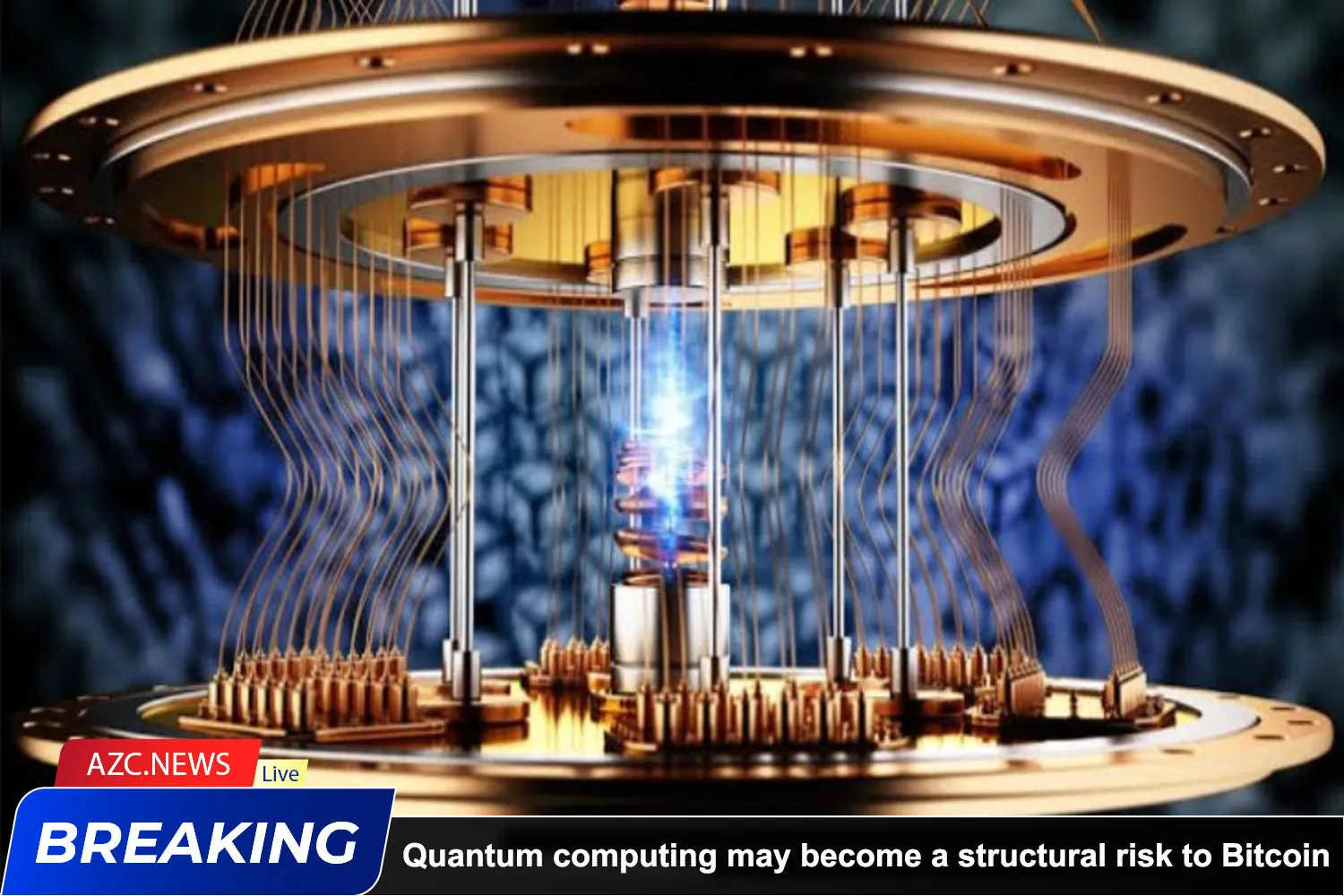
Coinbase has warned that the threat of quantum computing to Bitcoin is becoming increasingly serious, extending well beyond the risk of individual wallet hacks. If quantum technology reaches sufficient scale, it could undermine both the security foundations and the economic model of the Bitcoin network.
Quantum risk is rising faster than expected
In a LinkedIn post, David Duong — Head of Institutional Research at Coinbase — stated that the development of quantum computing is advancing faster than what the current crypto market is pricing in.
He noted that although a direct quantum attack on Bitcoin is not an immediate concern, the risk has moved beyond theoretical discussion and is gradually becoming a realistic issue that may affect both the security and operational mechanisms of the network.
Today, Bitcoin relies on two main cryptographic systems:
-
ECDSA: ensures that only the holder of the private key can sign transactions
-
SHA-256: forms the basis of Proof-of-Work and block mining
Quantum computers use qubits instead of traditional binary bits, allowing multiple states to be processed simultaneously and enabling calculations that would take today’s machines millions of years. At sufficient scale, algorithms such as Shor’s and Grover’s could weaken both cryptographic layers.
Two major risks posed to Bitcoin

According to Duong, quantum computers introduce two distinct threats:
-
Deriving private keys from public keys
This is considered the most serious risk. Many Bitcoin addresses have already exposed their public keys on-chain, making them potential targets once sufficiently powerful quantum computers emerge. Attackers could directly seize funds. -
Quantum-accelerated Bitcoin mining
If quantum devices mine Bitcoin far more efficiently than existing hardware, the mining power balance could be distorted. This would disrupt the reward mechanism, weaken decentralization, and increase the likelihood of 51% attacks.
Preparation is needed now, even if the risk is not immediate
Duong emphasized that quantum computers are still far from being capable of breaking Bitcoin. They continue to face limitations in scale, stability, and error correction.
However, he warned that the absence of an imminent threat should not lead to complacency. The open-source Bitcoin community should proactively research post-quantum cryptographic solutions to avoid being caught off guard if a technological breakthrough occurs.
Notable developments in the ecosystem
-
Solana implemented Winternitz Vault in January 2025 to enhance quantum resistance
-
Google unveiled the Willow quantum superchip, reportedly exceeding the capabilities of the world’s fastest supercomputers
-
Microsoft introduced the Majorana 1 quantum chip, built using semiconductor-superconductor materials to reduce qubit error rates
These advancements signal that the discussion surrounding “quantum computing and Bitcoin” is no longer purely theoretical but has become a strategic, long-term consideration for the entire crypto industry.