
Bitcoin is showing signs of stabilization around the $89,000 level after a recent corrective phase, as the U.S. Federal Reserve decided to keep interest rates unchanged at 3.5%–3.75%. The move helped calm broader financial markets while giving risk assets like cryptocurrencies room to regain buying interest.
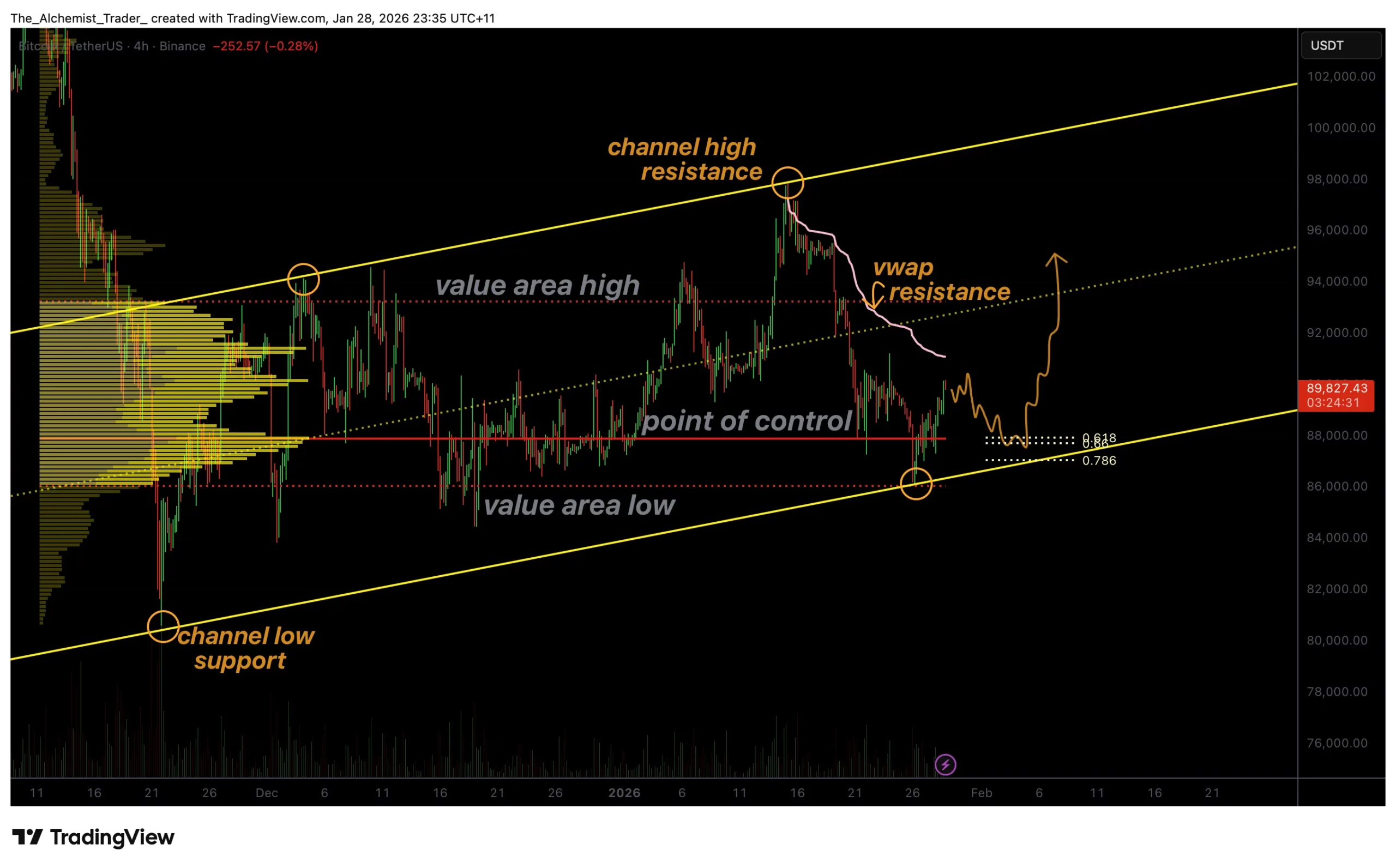
Following the latest pullback, Bitcoin reacted positively from a key technical support zone. As price approached the lower boundary of its trend channel, selling pressure began to fade, while fresh capital flowed into the derivatives market. This improvement suggests the market may be entering a consolidation phase before defining its next direction.
The Fed’s decision carries several implications for investors. Stable interest rates mean borrowing costs are not increasing, making cash and bonds less attractive in the short term. As a result, the U.S. dollar tends to soften or move sideways. Since Bitcoin often trades inversely to the dollar, a weaker or stagnant USD can increase demand for crypto as an alternative store of value.
Moreover, by avoiding aggressive tightening, the Fed signals that it is not overly restrictive in fighting inflation. This encourages investors to take on more risk, benefiting high-volatility assets such as Bitcoin.
From a technical perspective, Bitcoin’s recent bounce originated from the channel low, which aligns with the value area low — a region with dense historical trading activity. This area typically attracts buyers looking for discounted entries within a broader range. The market’s reaction there has been constructive, indicating that demand is beginning to absorb sell-side pressure.
Importantly, Bitcoin was not immediately rejected after the bounce. Instead, price managed to reclaim a key level: the Point of Control (POC). The POC represents the price level with the highest traded volume in the recent period and often serves as a dividing line between bullish and bearish control. Holding above the POC shifts short-term bias toward buyers and increases the probability that the move is more than a simple dead-cat bounce, potentially developing into a higher rotation within the channel.
Alongside improving price structure, open interest in the derivatives market has been rising. This suggests traders are opening new positions rather than merely closing existing ones. When open interest increases near major support levels, it often reflects stronger conviction that price may continue to recover in the short term.
That said, open interest alone is not inherently bullish or bearish. Its impact depends on whether Bitcoin can hold its reclaimed levels. If support fails, elevated positioning could amplify downside risk. For now, however, market structure and positioning continue to align with a short-term relief rally scenario.