

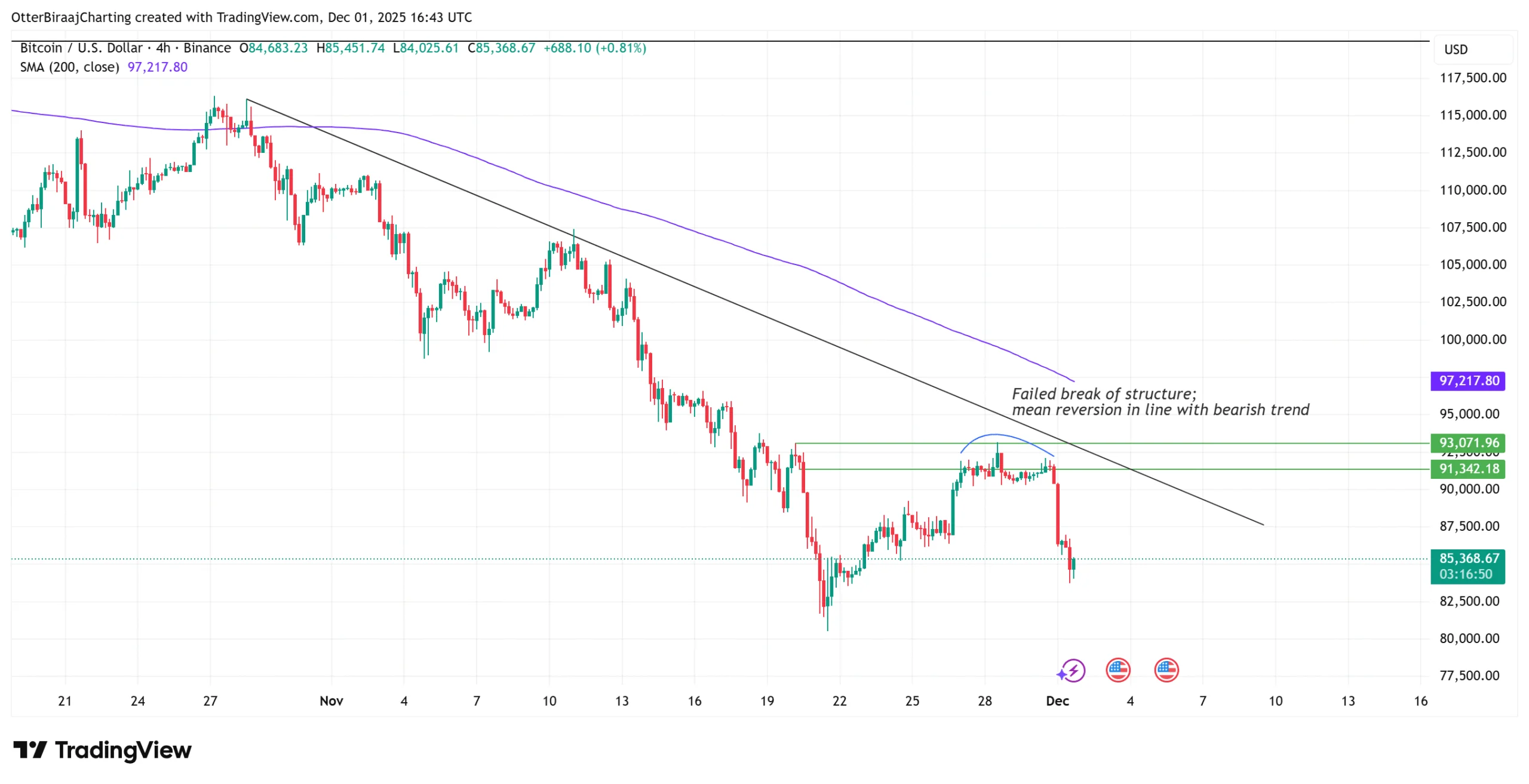
Bitcoin recently surged to nearly $93,300, only to quickly lose momentum as global financial markets wobbled and spot investors failed to provide sufficient liquidity. As a result, BTC dropped below $84,000 on Monday, breaking the mean-reversion trend.
Main Reason: Low Liquidity and Weak Buying Pressure
-
Thin spot liquidity and shallow order books are making it difficult for BTC to surpass $93,000.
-
Although a large amount of BTC (~400,000 coins) was purchased around $84,000, forming a temporary on-chain floor, actual buying between $84,000–$90,000 remains weak.
-
Many short-term holders are still underwater compared to their average entry of $104,600, creating a low-liquidity zone in the market.
-
Data from CryptoQuant shows that the Binance Bitcoin-to-Stablecoin Reserve Ratio has fallen to its lowest level since 2018, indicating a massive amount of stablecoins ready to buy BTC—but currently sitting idle.
Bitcoin’s Short-Term Outlook
-
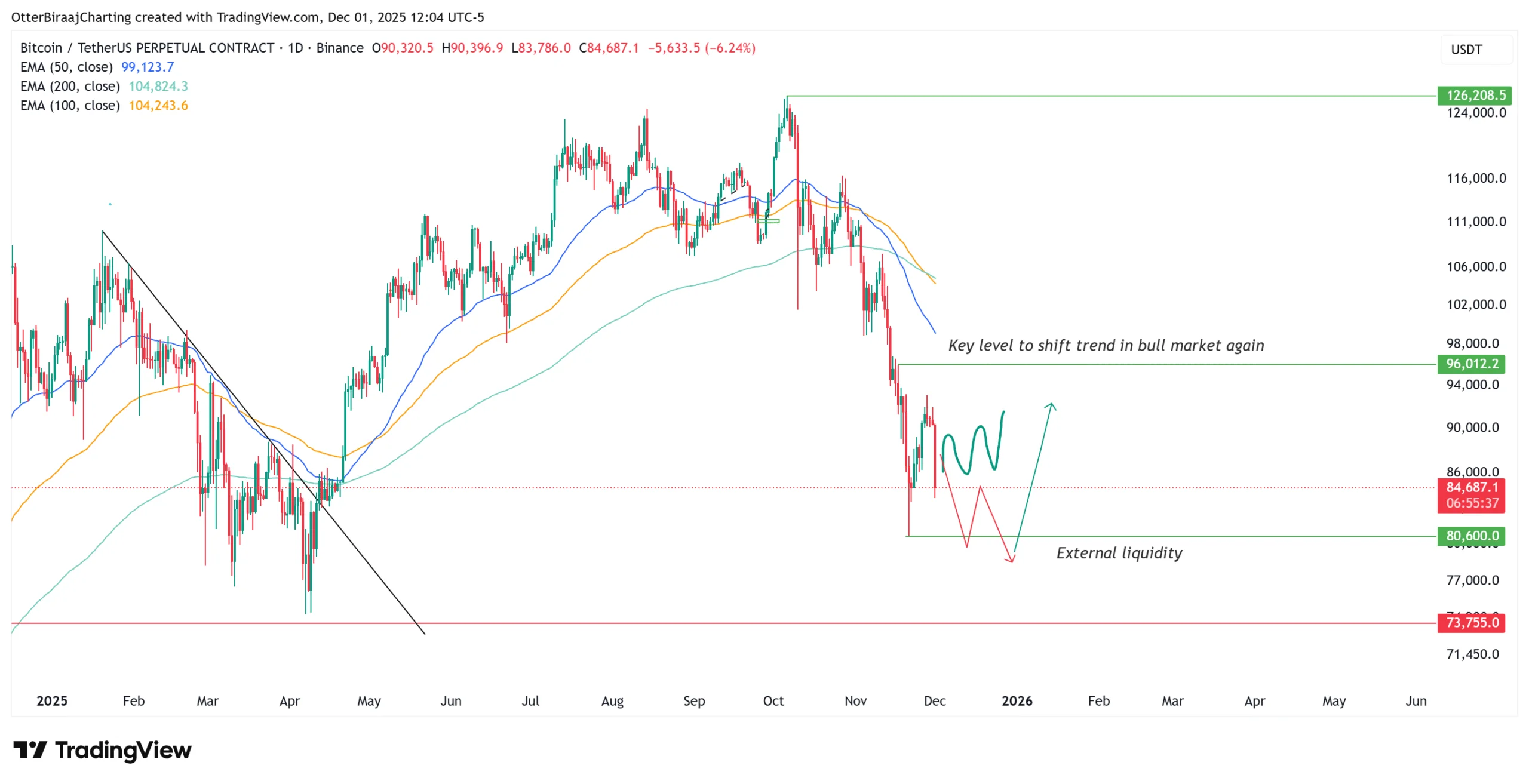
BTC is now trapped between $96,000 (recent range top) and $80,600–$84,000 (on-chain floor).
-
A retest of the lower band $80,600–$84,000 could absorb liquidity from below and build a base for a potential rebound.
-
Conversely, an immediate push toward $93,000–$96,000 without supporting liquidity from below could invite sellers back, risking further corrections.
Sideways Consolidation Ahead of FOMC
-
Bitcoin is likely to trade sideways before the FOMC meeting on December 9–10, as investors await signals on U.S. interest rate policy.
-
In this environment, many traders may stay on the sidelines rather than chasing volatile price moves.
Key Points:
-
BTC spiked to $93,300 but fell below $84,000.
-
Lack of spot liquidity and weak buying are the main causes.
-
400,000 BTC around $84,000 forms a temporary on-chain floor.
-
Stablecoins are accumulated and ready to fuel a rally, but remain idle.
-
BTC is trapped between $96,000 and $80,600–$84,000, likely trading sideways ahead of the FOMC meeting.