Major macro developments this week are turning global markets into a high-volatility battlefield, and Bitcoin (BTC) is not immune. After a shock announcement from U.S. President Donald Trump about new tariffs on Europe, Bitcoin reacted immediately, raising a critical question: Is BTC still a safe haven, or just another risk asset?
Bitcoin Shakes After Tariff Shock
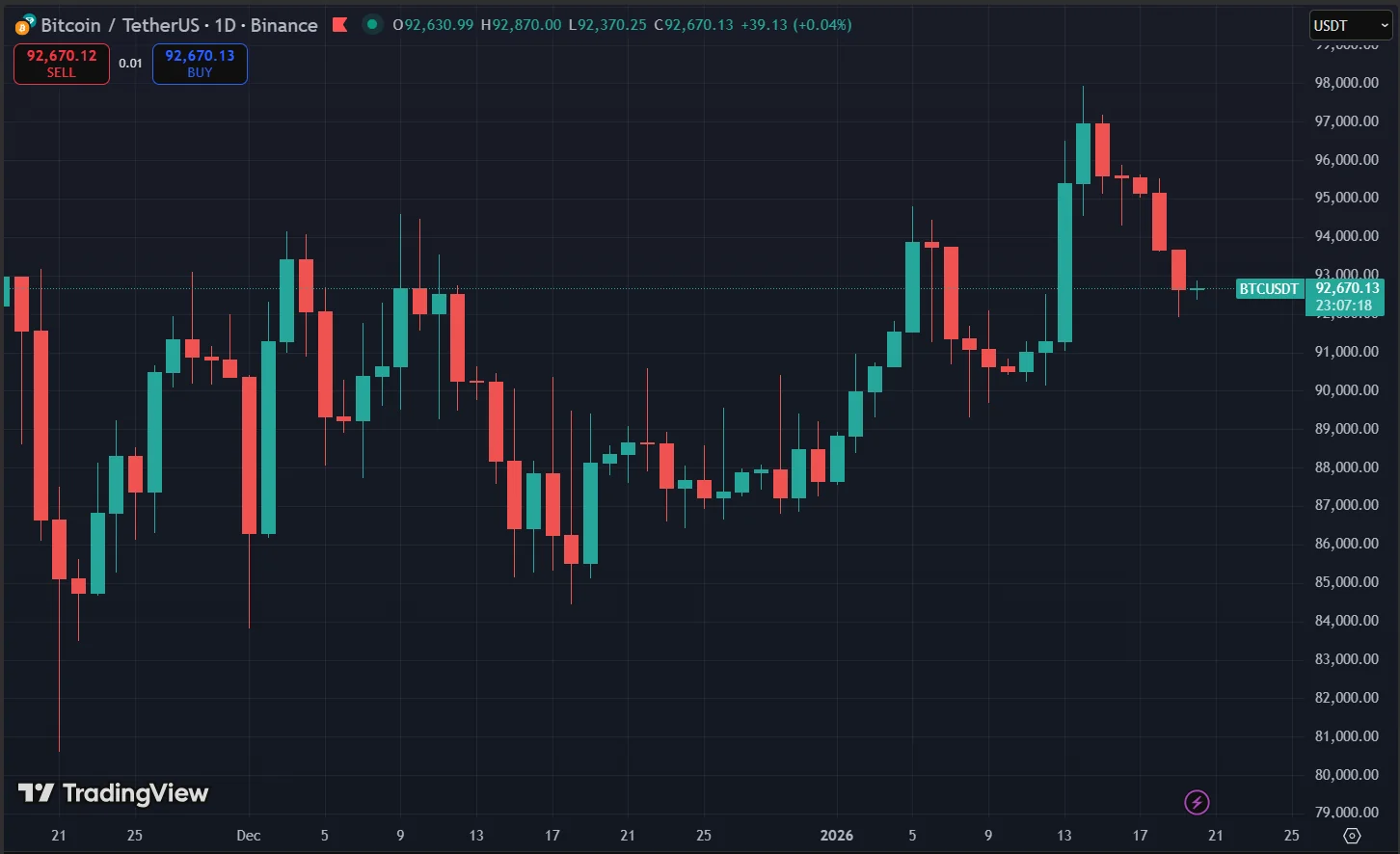
During the Asian trading session, Bitcoin briefly slipped toward the $92,000 level, reacting sharply to news that President Trump plans to impose tariffs on eight European countries: Denmark, Norway, Sweden, France, Germany, the Netherlands, Finland, and the United Kingdom.
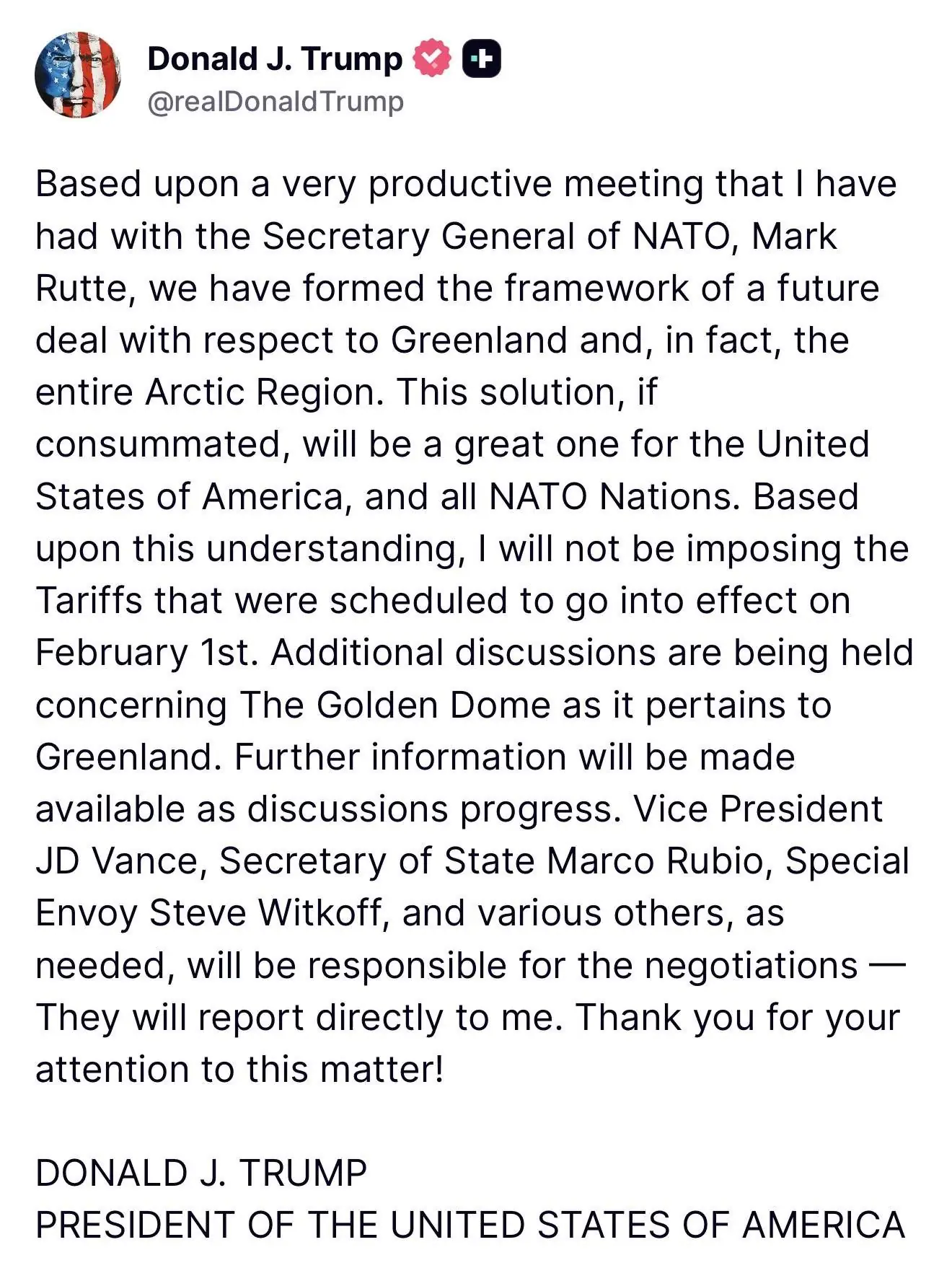
Under the proposal, the U.S. would introduce an initial 10% import tariff starting February 1, with the possibility of raising it to 25% by June if negotiations fail. Trump also made a hardline statement, saying:
“This tariff will remain due and payable until a deal is reached for the complete and total purchase of Greenland.”
With U.S. equity markets closed for the holiday, the first wave of risk aversion hit overseas markets. S&P 500 futures fell about 0.7%, while Nasdaq futures dropped around 1% during Asian hours.
In Asia, Japan’s Nikkei declined nearly 1%, and the MSCI Asia-Pacific ex-Japan index edged down 0.1%. Europe also looked fragile, with Euro Stoxx 50 and DAX futures both down about 1.1%.
Gold Surges While Bitcoin Loses Its “Safe Haven” Role
Amid rising uncertainty, capital rotated into traditional safe-haven assets. The U.S. dollar weakened against defensive currencies, falling 0.3% versus the Japanese yen and 0.2% against the Swiss franc, while the euro rebounded slightly.
Notably, gold jumped 1.5% to a new record high, silver printed an all-time high as well, and U.S. crude oil slipped on concerns that a renewed trade conflict could hurt global growth.
Bitcoin, instead of acting as protection, behaved more like a risk asset. Although BTC recovered part of its losses thanks to bargain buying and stabilizing sentiment, the initial sell-off highlighted how closely Bitcoin now tracks macro stress.
The $8 Trillion Threat and the “Weaponization of Capital”
European investors currently hold around $8 trillion in U.S. equities and bonds. According to Bloomberg, Deutsche Bank warned that any shift in these capital flows could hit markets harder than tariffs themselves.
The bank described this risk as the “weaponization of capital”, where financial flows become tools of geopolitical pressure rather than simple trade measures.
Beyond tariffs, markets are watching several key events:
-
China’s upcoming GDP and growth data.
-
Policy decisions from the Bank of Japan (BoJ).
-
U.S. economic releases that may shape the Fed’s next move.
-
Global leaders gathering at the World Economic Forum in Davos, where geopolitical tensions — including the Greenland dispute — are expected to dominate.
Bitcoin Faces a New Test
All these factors suggest Bitcoin is evolving from a perceived safe haven into an asset highly sensitive to global liquidity and risk sentiment. When uncertainty strikes, BTC is increasingly sold alongside equities rather than bought like gold.
The coming days may prove decisive, as Bitcoin must show whether it can truly preserve value — or whether it remains primarily a speculative asset in an increasingly complex macro environment.